5e. Sustainable Consumption and Consumers
Who we are?
Mária Csutora
Institute of Sustainable Development, Corvinus University of Budapest, Budapest, Hungary maria.csutora@uni-corvinus.hu
Roberto Merli
Department of Business Studies, Roma Tre University, Rome, Italy roberto.merli@uniroma3.it
Goals and Objectives
Sustainable consumption has been recognized as an integral part of the 2030 Agenda for Sustainable Development and can be defined as “the use of services and related products, which respond to basic needs and bring a better quality of life while minimizing the use of natural resources and toxic materials as well as the emissions of waste and pollutants over the life cycle of the service or product so as not to jeopardize the needs of further generations”.
Sustainable consumption is concerned with identifying, agreeing and meeting the needs for a prosperous life, equitably and within systems boundaries. It is concerned with how such needs are met through forms of consumption such as ownership, sharing and collaboration or indeed how they are avoided or forgone through rejection, abstinence or anti-consumption mindsets and actions.
Representing belated responses to the warning of IPCC 5th and now 6th Assessment reports, recent years have seen a rush of countries and organizations committing to net zero target. Setting aside concerns over the meaning and applicability of ‘net zero’, there are significant implications for consumers from these promises as organizations seek to take meaningful action towards them.
In this framework, the Sustainable Consumption and Consumer track seeks research and evidence-based reviews and reflections around the theme of ‘turning promises into meaningful action’.
Specific topics of interest are:
- Consumer understanding and trust in net-zero targets.
- Consumer understanding and attitudes toward highly contested ‘business as usual solutions such as Hydrogen, Carbon Capture Utilization and Storage and Offsetting
- Implications for governments, corporations, brands or products not setting such targets or doing so and failing to act.
- Consumers’ response to forms of action aimed at meeting targets, including product scarcity, restrictions on availability, rationing, reformulations, product deletions etc.
- Examination and exploration of boycotts, boycotts and other forms of consumer activism motivated by perceived lack of action on targets.
- Legal protection from false and misleading environmental claims and advertising
To provide ongoing support for research into ongoing sustainable consumption themes, we also welcome contributions in the following areas:
SUSTAINABLE PRODUCTS AND SERVICES
Sustainability product policies and future development; Clean technologies / cleaner production;
Sustainable product design, Eco-Design of products / Design for sustainability; Decoupling and dematerialization; Eco-innovation: Innovation in environmental goods and services; Integrated product policies; Internalization of environmental and social costs; Eco-efficiency; Incentives for development and acquiring of sustainable products.
Length and content of the proposed abstract to the track
Each proposed abstract (in connection to an area pointed out above) of between 300 and 500 words (including all aspects),
- shall be best organized (without headlines) along usual structures (e.g. intro/method/findings or results/ discussion/conclusions)
- does not need to, but can include references
- shall provide in a final section
a. to which SDG(s) and SDG-target(s) their proposed abstract especially relate to (e.g. “SDG+Target: 14.1.”).
b. a brief indication how the proposed contribution relates to the topic of the Conference.
Abstracts which do not outline points 3.a.) AND 3.b.) might be considered less relevant in the Review.
Potential publication channels
A special issue is underway in Discover Sustainability (Springer Journal, Scimago Q2).
Title: “Lifestyles and Business Models for Strong Sustainability”. Submission deadline: May, 2025.
Link: https://link.springer.com/collections/gibddcfbid
SUSTAINABLE LIFESTYLES AND CONSUMER EDUCATION
Advances in Sustainable Consumption & Lifestyles; Consumer engagement and environmental communication; Sustainable Lifestyles and Education; Emergence of post-consumerist lifestyles;
Impact of the economic crisis on consumption practices; Social practices research related to sustainable consumption; Cooperating for increasing sustainable provisioning opportunities; Social innovation to facilitate sustainable consumption; De-growth as a pathway for sustainable consumption; Impact of Social movements on sustainable consumption; Prospective consumer response to initiatives related to sustainable consumption (right to repair, taxation on aviation that would lead to increased price of flying, limiting carbon emission of car fleet, etc.).
INFORMING THE CUSTOMER: PRODUCT CERTIFICATION AND LABELING
Consumers and stakeholders’ information; Producer responsibility; Product environmental certification; Product eco-labeling and social labeling; Sustainable Public Procurement; Ethical investment and consumption; Marketing and sustainable consumption; Analysis of consumer preferences and attitudes.
SUSTAINABLE CONSUMPTION OPPORTUNITIES
Consumption and sustainable cities; Sustainable/Smart Cities and Communities; Sustainable Building and Construction; Sustainable Food Consumption and Food Waste Prevention; Sustainability and the transformation of agro-food systems; Sustainable Tourism, including ecotourism; Sustainable mobility.
NEW FORMS OF CONSUMPTION
Performance economy; Sharing Economy; Collaborative consumption; Product-As-Service; Product-Service-Systems and their implication for sustainable consumption.
MEASURING SUSTAINABLE PRODUCTION AND CONSUMPTION
Carbon and water footprint; Life cycle thinking, Life Cycle Assessment, Life Cycle Costing, Material flow analysis, Social life cycle assessment; Product and services sustainability indicators.
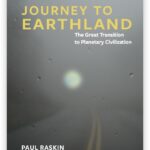
Prof. Philip Vergragt’s keynote at ISDRS 26th annual Conference 15-7-2020
At the online conference Philip Vergragt of our partner organisation the “Great Transition Initiative” presented his keynote on sustainable consumption. After looking back at the historical creation of consumerism, he addressed the question how we can change away from consumerism. We can see the Covid-19 lockdown as a big experiment: can we live with less consumption? He promotes different policies for the various income levels for enabling shared prosperity.
Recommended Reading
State of Art
UN – Goal 12: Ensure sustainable consumption and production patterns
https://www.un.org/sustainabledevelopment/sustainable-consumption-production/
UN – SDG Knowledge Platform – Goal 12
https://sustainabledevelopment.un.org/topics/sustainableconsumptionandproduction
European Union Science Hub – Sustainable production and consumption
https://ec.europa.eu/jrc/en/research-topic/sustainable-production-and-consumption
Recommended Sources
Harvard Business Review, The Elusive Green Consumer, July-August 2019
https://hbr.org/2019/07/the-elusive-green-consumer
- Wang, P. Ghadimi, M.K. Lim, M.-L. Tseng, A literature review of sustainable consumption and production: a comparative analysis in developed and developing economies
- Clean. Prod., 206 (2019), pp. 741-754, 10.1016/j.jclepro.2018.09.172
V.S.C. Tunn, N.M.P. Bocken, E.A. van den Hende, J.P.L. Schoormans, Business models for sustainable consumption in the circular economy: an expert study
- Clean. Prod., 212 (2019), pp. 324-333 10.1016/j.jclepro.2018.11.290
N.M.P. Bocken, R. Mugge, C.A. Bom, H.J. Lemstra, Pay-per-use business models as a driver for sustainable consumption: evidence from the case of HOMIE